
Product Center
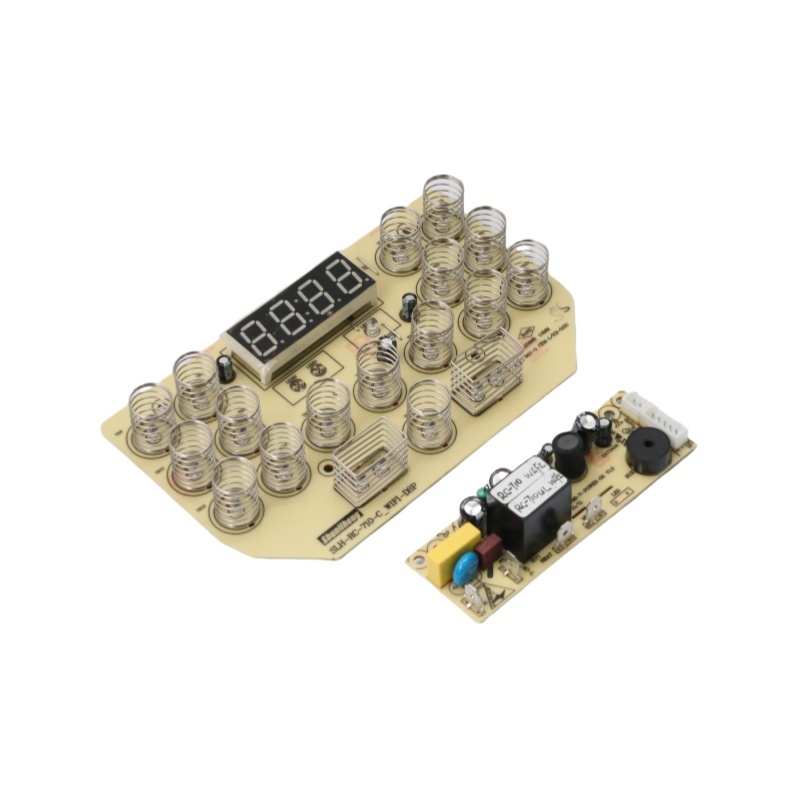
Air fryer control panel
The company focuses on the R&D, production, and sales of home appliance hardware and software, covering kitchen appliances, smart home, home textile controllers, etc. It also focuses on WIFI/Bluetooth, 5G/6G module applications, empowering smart life with innovative technologies.
Category:
Product Description
**Air Fryer Control Panel**
Air fryers have revolutionized the way we cook, offering a healthier alternative to traditional frying methods while retaining the delicious flavors we all love. At the heart of this innovative kitchen appliance lies the control panel, a crucial component that allows users to navigate various cooking functions and settings. Understanding the air fryer control panel is essential for maximizing its potential and achieving perfect culinary results.
**Overview of the Control Panel**
The control panel of an air fryer typically features a combination of buttons, knobs, and digital displays. Depending on the model, it may vary significantly in design and functionality. However, most air fryers share common elements that are user-friendly and intuitive. The primary functions usually include temperature control, timer settings, cooking modes, and power buttons.
**Temperature Control**
One of the most important features of the air fryer control panel is the temperature control. This function allows users to set the cooking temperature, which usually ranges from 180°F to 400°F (about 82°C to 204°C). Different recipes require different temperatures, so having precise control over this setting is vital.
Most air fryers feature either a dial or buttons to adjust the temperature. A digital display often accompanies these controls, showing the current temperature and making it easy to monitor changes. Some advanced models may even include preset temperature options for popular dishes, such as fries, chicken, or vegetables, making it easier for beginners to achieve optimal results.
**Timer Settings**
Alongside temperature control, the timer settings on the air fryer control panel are equally crucial. The timer function allows users to set a specific cooking duration, which can range from a few minutes to over an hour, depending on the recipe.
A digital timer is common in many models, providing clear visibility of the remaining cooking time. Once the timer reaches zero, the air fryer will usually emit an audible signal to alert the user that the cooking process is complete. This feature is particularly helpful for busy individuals who may multitask while cooking, ensuring that food does not overcook or burn.
**Cooking Modes**
Modern air fryers often come equipped with multiple cooking modes, each designed for specific types of food. These modes can be easily accessed through the control panel and typically include options such as air fry, bake, roast, grill, and dehydrate.
Each cooking mode is optimized for different cooking techniques, allowing users to achieve the best results for a variety of dishes. For instance, the air fry mode is perfect for crispy foods, while the bake mode is ideal for pastries and bread. Understanding these modes and when to use them can significantly enhance the cooking experience and the quality of the final dish.
**Power Button and Safety Features**
The power button is a fundamental component of the air fryer control panel. It is usually located prominently for easy access. Turning the air fryer on and off is essential for operation, and most models include safety features that prevent accidental activation.
Additionally, many air fryers come with built-in safety mechanisms such as auto shut-off functions. This feature automatically turns off the appliance after a certain period or when the cooking cycle is complete, ensuring that the air fryer does not overheat or pose a fire hazard.
**User-Friendly Design**
One of the most appealing aspects of air fryer control panels is their user-friendly design. Many manufacturers prioritize simplicity, ensuring that even novice cooks can operate the appliance with ease. Clear labeling of buttons and functions helps users navigate the control panel without confusion.
Some models may also include touch screens, which provide a modern and sleek interface. These touch screens often come with pre-programmed settings for popular dishes, allowing users to select a meal and start cooking with just a few taps.
**Conclusion**
The control panel of an air fryer plays a vital role in the overall cooking experience. With features such as temperature control, timer settings, various cooking modes, and safety functions, it empowers users to create a wide range of delicious meals with ease.
Understanding how to navigate the control panel can help maximize the air fryer’s potential, ensuring that every dish is cooked to perfection. As technology continues to evolve, we can expect even more innovative features in future air fryer models, making this appliance an indispensable tool in modern kitchens. Whether you are a seasoned chef or a beginner, mastering the air fryer control panel is the first step toward culinary success.
**Air Fryer Control Panel**
Air fryers have revolutionized the way we cook, offering a healthier alternative to traditional frying methods while retaining the delicious flavors we all love. At the heart of this innovative kitchen appliance lies the control panel, a crucial component that allows users to navigate various cooking functions and settings. Understanding the air fryer control panel is essential for maximizing its potential and achieving perfect culinary results.
**Overview of the Control Panel**
The control panel of an air fryer typically features a combination of buttons, knobs, and digital displays. Depending on the model, it may vary significantly in design and functionality. However, most air fryers share common elements that are user-friendly and intuitive. The primary functions usually include temperature control, timer settings, cooking modes, and power buttons.
**Temperature Control**
One of the most important features of the air fryer control panel is the temperature control. This function allows users to set the cooking temperature, which usually ranges from 180°F to 400°F (about 82°C to 204°C). Different recipes require different temperatures, so having precise control over this setting is vital.
Most air fryers feature either a dial or buttons to adjust the temperature. A digital display often accompanies these controls, showing the current temperature and making it easy to monitor changes. Some advanced models may even include preset temperature options for popular dishes, such as fries, chicken, or vegetables, making it easier for beginners to achieve optimal results.
**Timer Settings**
Alongside temperature control, the timer settings on the air fryer control panel are equally crucial. The timer function allows users to set a specific cooking duration, which can range from a few minutes to over an hour, depending on the recipe.
A digital timer is common in many models, providing clear visibility of the remaining cooking time. Once the timer reaches zero, the air fryer will usually emit an audible signal to alert the user that the cooking process is complete. This feature is particularly helpful for busy individuals who may multitask while cooking, ensuring that food does not overcook or burn.
**Cooking Modes**
Modern air fryers often come equipped with multiple cooking modes, each designed for specific types of food. These modes can be easily accessed through the control panel and typically include options such as air fry, bake, roast, grill, and dehydrate.
Each cooking mode is optimized for different cooking techniques, allowing users to achieve the best results for a variety of dishes. For instance, the air fry mode is perfect for crispy foods, while the bake mode is ideal for pastries and bread. Understanding these modes and when to use them can significantly enhance the cooking experience and the quality of the final dish.
**Power Button and Safety Features**
The power button is a fundamental component of the air fryer control panel. It is usually located prominently for easy access. Turning the air fryer on and off is essential for operation, and most models include safety features that prevent accidental activation.
Additionally, many air fryers come with built-in safety mechanisms such as auto shut-off functions. This feature automatically turns off the appliance after a certain period or when the cooking cycle is complete, ensuring that the air fryer does not overheat or pose a fire hazard.
**User-Friendly Design**
One of the most appealing aspects of air fryer control panels is their user-friendly design. Many manufacturers prioritize simplicity, ensuring that even novice cooks can operate the appliance with ease. Clear labeling of buttons and functions helps users navigate the control panel without confusion.
Some models may also include touch screens, which provide a modern and sleek interface. These touch screens often come with pre-programmed settings for popular dishes, allowing users to select a meal and start cooking with just a few taps.
**Conclusion**
The control panel of an air fryer plays a vital role in the overall cooking experience. With features such as temperature control, timer settings, various cooking modes, and safety functions, it empowers users to create a wide range of delicious meals with ease.
Understanding how to navigate the control panel can help maximize the air fryer’s potential, ensuring that every dish is cooked to perfection. As technology continues to evolve, we can expect even more innovative features in future air fryer models, making this appliance an indispensable tool in modern kitchens. Whether you are a seasoned chef or a beginner, mastering the air fryer control panel is the first step toward culinary success.
Keywords:
Air fryer


Ningbo Shunliheng Electronics Co., Ltd.
Address: No. 65, Haichao Road, Zhongyi Ningbo Eco-Park, Yuyao City, Zhejiang Province