Product Center
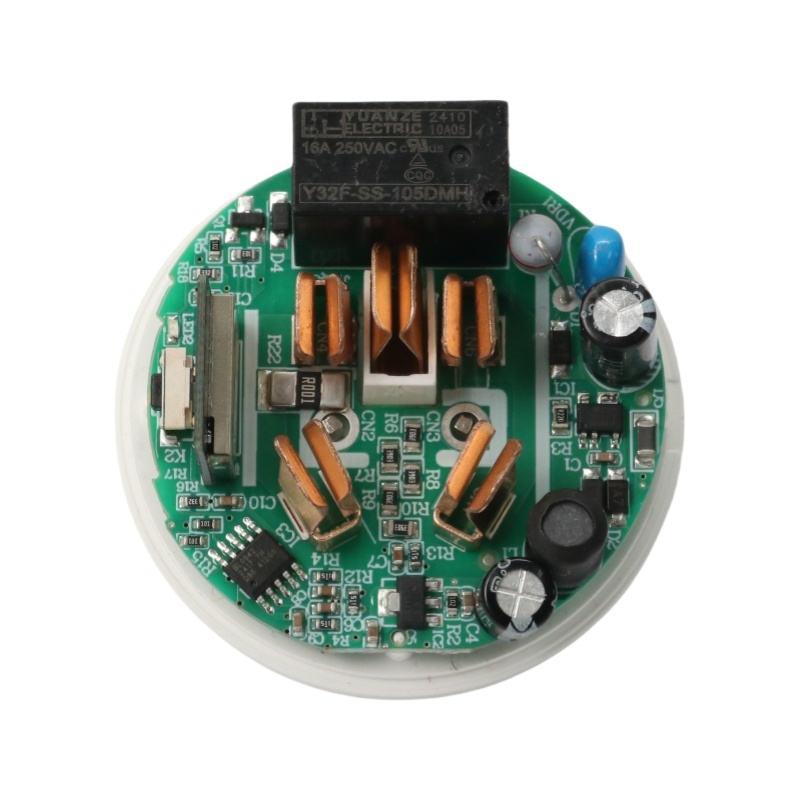
Smart irrigation equipment control board
The company focuses on the R&D, production, and sales of home appliance hardware and software, covering kitchen appliances, smart home, home textile controllers, etc. It also focuses on WIFI/Bluetooth, 5G/6G module applications, empowering smart life with innovative technologies.
Category:
Product Description
**Smart Irrigation Equipment Control Board**
In recent years, the advancement of technology has led to significant innovations in agriculture. Among these innovations, smart irrigation systems have emerged as a crucial solution for optimizing water usage in farming. At the heart of these systems lies the smart irrigation equipment control board, a pivotal component that enables efficient management of irrigation processes. This article delves into the functionality, benefits, and future prospects of smart irrigation equipment control boards.
The primary function of a smart irrigation equipment control board is to manage the operation of irrigation systems automatically. Traditional irrigation methods often rely on manual control, which can lead to overwatering or underwatering crops. In contrast, smart control boards utilize sensors and data analytics to monitor soil moisture levels, weather conditions, and crop requirements. By integrating this data, the control board can make real-time decisions on when and how much water to dispense, ensuring that plants receive the optimal amount of hydration.
One of the key benefits of using a smart irrigation control board is water conservation. Water scarcity is a growing concern globally, and agriculture accounts for a significant portion of water usage. By implementing smart irrigation systems, farmers can significantly reduce water waste. The control board's ability to adjust watering schedules based on real-time data helps prevent unnecessary irrigation during rainy periods or when the soil is already moist. This efficient use of water not only benefits the environment but also helps farmers reduce their operational costs.
Additionally, smart irrigation control boards can enhance crop yields. By providing plants with precise amounts of water at the right times, farmers can create optimal growing conditions. Consistent and adequate watering promotes healthier plants, leading to improved growth and higher yields. Furthermore, many smart control boards come equipped with features that allow farmers to set specific watering schedules for different crops, ensuring that each type of plant receives the care it needs to thrive.
Another advantage of smart irrigation equipment control boards is their ability to integrate with other agricultural technologies. Many modern farms utilize various smart devices, such as drones and weather stations, to collect data and improve farming practices. A smart irrigation control board can communicate with these devices, creating a cohesive system that maximizes efficiency. For instance, if a weather station predicts rain, the control board can automatically adjust the irrigation schedule to prevent overwatering. This level of integration not only streamlines operations but also empowers farmers to make informed decisions based on comprehensive data.
Moreover, the user-friendly interface of smart irrigation control boards makes them accessible to farmers of all technological backgrounds. Many systems offer mobile applications that allow farmers to monitor and control their irrigation systems remotely. This feature is particularly beneficial for those who manage multiple fields or operate in remote locations. With just a few taps on their smartphones, farmers can adjust watering schedules, check moisture levels, and receive alerts about system performance, all from the convenience of their mobile devices.
As the agricultural sector continues to embrace technology, the future of smart irrigation equipment control boards looks promising. Innovations such as artificial intelligence and machine learning are expected to play a significant role in the evolution of these systems. For instance, AI algorithms could analyze historical data to predict future irrigation needs more accurately, allowing for even greater efficiency. Additionally, advancements in sensor technology may lead to more precise measurements of soil moisture and plant health, further enhancing the capabilities of smart control boards.
Despite the numerous benefits, it is essential to consider some challenges associated with the implementation of smart irrigation control boards. Initial costs can be a barrier for small-scale farmers who may not have the resources to invest in advanced technology. However, as the technology matures and becomes more widely adopted, prices are likely to decrease, making it more accessible to a broader range of farmers. Additionally, proper training and support are crucial to ensure that farmers can effectively utilize these systems. Agricultural extension services and educational programs can play a vital role in helping farmers understand and implement smart irrigation solutions.
In conclusion, the smart irrigation equipment control board represents a significant advancement in agricultural technology. By automating irrigation processes and utilizing real-time data, these systems offer numerous benefits, including water conservation, improved crop yields, and enhanced integration with other agricultural technologies. As the industry continues to evolve, the future of smart irrigation holds great potential for addressing the challenges of water scarcity and promoting sustainable farming practices. With ongoing innovation and support, smart irrigation control boards can help farmers thrive in an increasingly complex and resource-constrained world.
**Smart Irrigation Equipment Control Board**
In recent years, the advancement of technology has led to significant innovations in agriculture. Among these innovations, smart irrigation systems have emerged as a crucial solution for optimizing water usage in farming. At the heart of these systems lies the smart irrigation equipment control board, a pivotal component that enables efficient management of irrigation processes. This article delves into the functionality, benefits, and future prospects of smart irrigation equipment control boards.
The primary function of a smart irrigation equipment control board is to manage the operation of irrigation systems automatically. Traditional irrigation methods often rely on manual control, which can lead to overwatering or underwatering crops. In contrast, smart control boards utilize sensors and data analytics to monitor soil moisture levels, weather conditions, and crop requirements. By integrating this data, the control board can make real-time decisions on when and how much water to dispense, ensuring that plants receive the optimal amount of hydration.
One of the key benefits of using a smart irrigation control board is water conservation. Water scarcity is a growing concern globally, and agriculture accounts for a significant portion of water usage. By implementing smart irrigation systems, farmers can significantly reduce water waste. The control board's ability to adjust watering schedules based on real-time data helps prevent unnecessary irrigation during rainy periods or when the soil is already moist. This efficient use of water not only benefits the environment but also helps farmers reduce their operational costs.
Additionally, smart irrigation control boards can enhance crop yields. By providing plants with precise amounts of water at the right times, farmers can create optimal growing conditions. Consistent and adequate watering promotes healthier plants, leading to improved growth and higher yields. Furthermore, many smart control boards come equipped with features that allow farmers to set specific watering schedules for different crops, ensuring that each type of plant receives the care it needs to thrive.
Another advantage of smart irrigation equipment control boards is their ability to integrate with other agricultural technologies. Many modern farms utilize various smart devices, such as drones and weather stations, to collect data and improve farming practices. A smart irrigation control board can communicate with these devices, creating a cohesive system that maximizes efficiency. For instance, if a weather station predicts rain, the control board can automatically adjust the irrigation schedule to prevent overwatering. This level of integration not only streamlines operations but also empowers farmers to make informed decisions based on comprehensive data.
Moreover, the user-friendly interface of smart irrigation control boards makes them accessible to farmers of all technological backgrounds. Many systems offer mobile applications that allow farmers to monitor and control their irrigation systems remotely. This feature is particularly beneficial for those who manage multiple fields or operate in remote locations. With just a few taps on their smartphones, farmers can adjust watering schedules, check moisture levels, and receive alerts about system performance, all from the convenience of their mobile devices.
As the agricultural sector continues to embrace technology, the future of smart irrigation equipment control boards looks promising. Innovations such as artificial intelligence and machine learning are expected to play a significant role in the evolution of these systems. For instance, AI algorithms could analyze historical data to predict future irrigation needs more accurately, allowing for even greater efficiency. Additionally, advancements in sensor technology may lead to more precise measurements of soil moisture and plant health, further enhancing the capabilities of smart control boards.
Despite the numerous benefits, it is essential to consider some challenges associated with the implementation of smart irrigation control boards. Initial costs can be a barrier for small-scale farmers who may not have the resources to invest in advanced technology. However, as the technology matures and becomes more widely adopted, prices are likely to decrease, making it more accessible to a broader range of farmers. Additionally, proper training and support are crucial to ensure that farmers can effectively utilize these systems. Agricultural extension services and educational programs can play a vital role in helping farmers understand and implement smart irrigation solutions.
In conclusion, the smart irrigation equipment control board represents a significant advancement in agricultural technology. By automating irrigation processes and utilizing real-time data, these systems offer numerous benefits, including water conservation, improved crop yields, and enhanced integration with other agricultural technologies. As the industry continues to evolve, the future of smart irrigation holds great potential for addressing the challenges of water scarcity and promoting sustainable farming practices. With ongoing innovation and support, smart irrigation control boards can help farmers thrive in an increasingly complex and resource-constrained world.
Keywords:
Smart irrigation equipment


Ningbo Shunliheng Electronics Co., Ltd.
Address: No. 65, Haichao Road, Zhongyi Ningbo Eco-Park, Yuyao City, Zhejiang Province