
Product Center
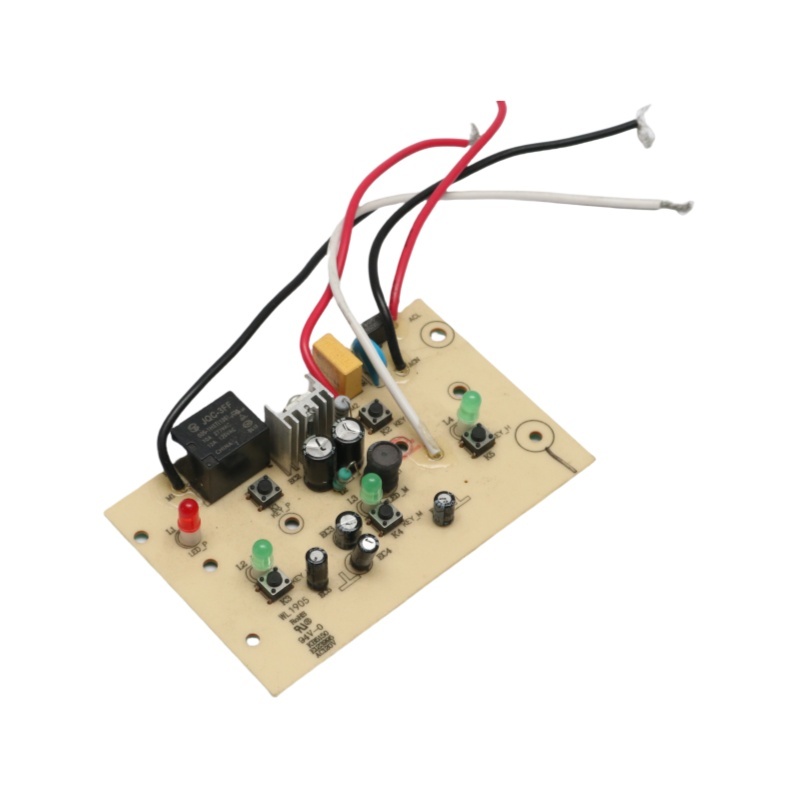
Blender control panel
The company focuses on the R&D, production, and sales of home appliance hardware and software, covering kitchen appliances, smart home, home textile controllers, etc. It also focuses on WIFI/Bluetooth, 5G/6G module applications, empowering smart life with innovative technologies.
Category:
Product Description
# Blender Control Panel
Blender is a powerful open-source 3D creation suite that has gained immense popularity among artists, animators, and designers. One of the essential aspects of Blender is its control panel, which serves as the hub for navigating the software's extensive features and tools. In this article, we will explore the Blender control panel in detail, breaking down its components, functionality, and how to effectively utilize it for various projects.
## Understanding the Interface
When you first open Blender, you are greeted with a user interface that may seem overwhelming at first glance. However, the control panel is designed to provide a streamlined experience for users, allowing them to access a variety of tools and settings efficiently. The control panel is typically located on the left side of the screen and contains several key sections, including the Tool Shelf, Properties Editor, and the Outliner.
The Tool Shelf houses a variety of tools that are context-sensitive, meaning they change based on the mode you are currently in, whether it be Object Mode, Edit Mode, or Sculpt Mode. This adaptability allows users to quickly access the tools they need without having to navigate through multiple menus.
## Tool Shelf
The Tool Shelf is an integral part of the Blender control panel, offering a selection of tools tailored to the specific tasks at hand. Each mode in Blender has its own set of tools. For instance, in Object Mode, you will find tools for transforming objects, while in Edit Mode, you will have access to mesh editing tools.
The Tool Shelf also allows for customization, enabling users to create their own toolsets by adding frequently used tools for easy access. This feature can significantly enhance workflow efficiency, particularly for users who engage in repetitive tasks.
## Properties Editor
Another crucial component of the Blender control panel is the Properties Editor. This section provides detailed settings for the selected object, including its materials, modifiers, and object properties. The Properties Editor is organized into several tabs, each corresponding to different aspects of the object or scene.
For example, the Materials tab allows users to apply textures and adjust shading properties, while the Modifiers tab enables the addition of effects such as subdivision surfaces or mirror modifiers. The ability to tweak these settings in real-time is a powerful feature of Blender, allowing artists to see the results of their adjustments immediately.
## Outliner
The Outliner is a hierarchical view of all the objects in your scene. It serves as a directory that allows users to manage and organize their projects effectively. Through the Outliner, you can select, hide, or rename objects, making it easier to navigate complex scenes with multiple elements.
Additionally, the Outliner can be used to group objects, creating collections that help maintain order within your project. This organization is especially beneficial when working on large projects where many objects are involved, as it allows for quick access and management of scene elements.
## Customizing the Control Panel
One of the standout features of Blender is its high level of customization. Users can tailor the control panel to suit their specific workflows by rearranging panels, adding or removing tools, and changing the layout. This adaptability is crucial for enhancing productivity, as different users may have varying preferences and work habits.
To customize the control panel, you can right-click on panels to access options such as splitting, joining, or changing the layout. By experimenting with different configurations, you can create a workspace that feels intuitive and efficient for your individual needs.
## Tips for Effective Use
To maximize your productivity while using the Blender control panel, consider the following tips:
1. **Familiarize Yourself with Shortcuts**: Blender has a wide range of keyboard shortcuts that can significantly speed up your workflow. Take the time to learn these shortcuts for frequently used tools and commands.
2. **Utilize the Search Function**: If you find yourself struggling to locate a specific tool or setting, use the search function (F3) to quickly find what you need. This feature can save you a considerable amount of time.
3. **Experiment with Add-ons**: Blender supports various add-ons that can enhance functionality. Explore the available add-ons and consider integrating those that align with your workflow.
4. **Save Custom Layouts**: Once you have customized your control panel to your liking, save your layout as a startup file. This way, you can ensure that your preferred setup is available every time you launch Blender.
5. **Practice Regularly**: The more you use Blender, the more comfortable you will become with the control panel. Regular practice will help reinforce your understanding of the tools and their applications.
## Conclusion
The Blender control panel is a vital aspect of the software, providing users with access to an extensive array of tools and settings. By understanding the various components of the control panel, such as the Tool Shelf, Properties Editor, and Outliner, you can enhance your workflow and creativity. With its customizable features and user-friendly interface, Blender continues to empower artists and designers to bring their visions to life. Whether you are a beginner or an experienced user, mastering the control panel will undoubtedly elevate your 3D creation experience.
# Blender Control Panel
Blender is a powerful open-source 3D creation suite that has gained immense popularity among artists, animators, and designers. One of the essential aspects of Blender is its control panel, which serves as the hub for navigating the software's extensive features and tools. In this article, we will explore the Blender control panel in detail, breaking down its components, functionality, and how to effectively utilize it for various projects.
## Understanding the Interface
When you first open Blender, you are greeted with a user interface that may seem overwhelming at first glance. However, the control panel is designed to provide a streamlined experience for users, allowing them to access a variety of tools and settings efficiently. The control panel is typically located on the left side of the screen and contains several key sections, including the Tool Shelf, Properties Editor, and the Outliner.
The Tool Shelf houses a variety of tools that are context-sensitive, meaning they change based on the mode you are currently in, whether it be Object Mode, Edit Mode, or Sculpt Mode. This adaptability allows users to quickly access the tools they need without having to navigate through multiple menus.
## Tool Shelf
The Tool Shelf is an integral part of the Blender control panel, offering a selection of tools tailored to the specific tasks at hand. Each mode in Blender has its own set of tools. For instance, in Object Mode, you will find tools for transforming objects, while in Edit Mode, you will have access to mesh editing tools.
The Tool Shelf also allows for customization, enabling users to create their own toolsets by adding frequently used tools for easy access. This feature can significantly enhance workflow efficiency, particularly for users who engage in repetitive tasks.
## Properties Editor
Another crucial component of the Blender control panel is the Properties Editor. This section provides detailed settings for the selected object, including its materials, modifiers, and object properties. The Properties Editor is organized into several tabs, each corresponding to different aspects of the object or scene.
For example, the Materials tab allows users to apply textures and adjust shading properties, while the Modifiers tab enables the addition of effects such as subdivision surfaces or mirror modifiers. The ability to tweak these settings in real-time is a powerful feature of Blender, allowing artists to see the results of their adjustments immediately.
## Outliner
The Outliner is a hierarchical view of all the objects in your scene. It serves as a directory that allows users to manage and organize their projects effectively. Through the Outliner, you can select, hide, or rename objects, making it easier to navigate complex scenes with multiple elements.
Additionally, the Outliner can be used to group objects, creating collections that help maintain order within your project. This organization is especially beneficial when working on large projects where many objects are involved, as it allows for quick access and management of scene elements.
## Customizing the Control Panel
One of the standout features of Blender is its high level of customization. Users can tailor the control panel to suit their specific workflows by rearranging panels, adding or removing tools, and changing the layout. This adaptability is crucial for enhancing productivity, as different users may have varying preferences and work habits.
To customize the control panel, you can right-click on panels to access options such as splitting, joining, or changing the layout. By experimenting with different configurations, you can create a workspace that feels intuitive and efficient for your individual needs.
## Tips for Effective Use
To maximize your productivity while using the Blender control panel, consider the following tips:
1. **Familiarize Yourself with Shortcuts**: Blender has a wide range of keyboard shortcuts that can significantly speed up your workflow. Take the time to learn these shortcuts for frequently used tools and commands.
2. **Utilize the Search Function**: If you find yourself struggling to locate a specific tool or setting, use the search function (F3) to quickly find what you need. This feature can save you a considerable amount of time.
3. **Experiment with Add-ons**: Blender supports various add-ons that can enhance functionality. Explore the available add-ons and consider integrating those that align with your workflow.
4. **Save Custom Layouts**: Once you have customized your control panel to your liking, save your layout as a startup file. This way, you can ensure that your preferred setup is available every time you launch Blender.
5. **Practice Regularly**: The more you use Blender, the more comfortable you will become with the control panel. Regular practice will help reinforce your understanding of the tools and their applications.
## Conclusion
The Blender control panel is a vital aspect of the software, providing users with access to an extensive array of tools and settings. By understanding the various components of the control panel, such as the Tool Shelf, Properties Editor, and Outliner, you can enhance your workflow and creativity. With its customizable features and user-friendly interface, Blender continues to empower artists and designers to bring their visions to life. Whether you are a beginner or an experienced user, mastering the control panel will undoubtedly elevate your 3D creation experience.
Keywords:
Blender


Ningbo Shunliheng Electronics Co., Ltd.
Address: No. 65, Haichao Road, Zhongyi Ningbo Eco-Park, Yuyao City, Zhejiang Province